B&D Donor Recognition Ideas
Donor recognition ideas designed around your story.
We understand it. We develop it. We deliver it.
Bring us your mission, donor list, campaign goal, space, or budget — B&D turns that starting point into an original recognition solution, then guides it through design, fabrication, and installation.
Explore the possibilities
Donor recognition can become more than a list of names.
The best donor recognition ideas begin with purpose. A display can express a mission, celebrate a campaign, preserve history, strengthen a space, or create room for future giving.
Begin with a symbol, a story, a material — or simply a wall that needs purpose. These examples show the range B&D can develop, not a catalog of fixed products.
Our process
01
We understand.
We listen for the mission, fundraising goals, audience, architecture, timing, and budget behind the project.
02
We develop.
Our team translates those priorities into thoughtful, original concepts — and responds promptly as the direction evolves.
03
We deliver responsibly.
We guide materials, fabrication, expansion, and installation with quality, service, and practical value in mind.
Look for a direction, not a duplicate.
01
Sculptural Form & Spatial Thinking
Make recognition part of the space.
Recognition doesn't have to hang flat on a wall. Working with curves, depth, light, and the architecture itself, a display becomes part of the room — something you move through, not just read.

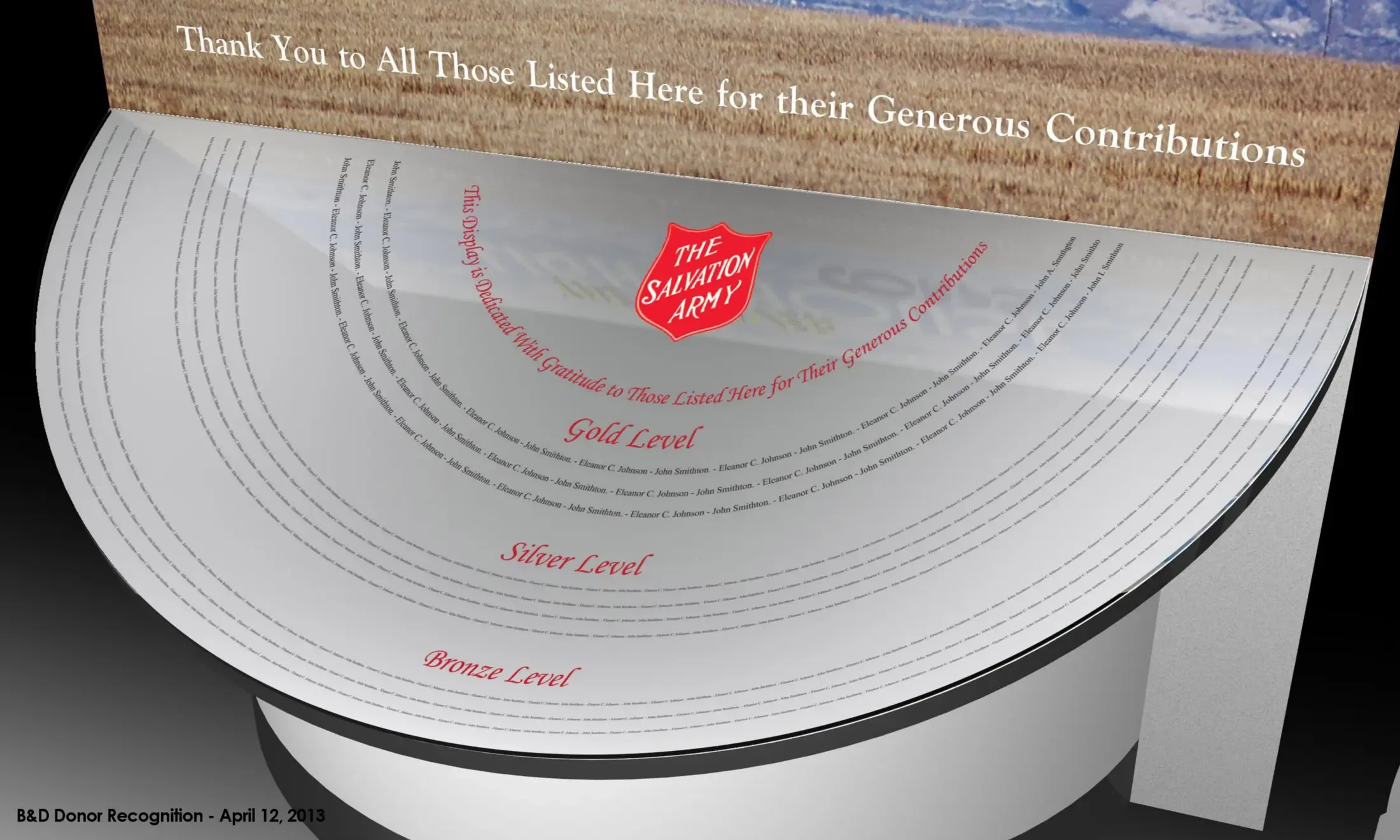
Denver Light House Corps
A freestanding, curved recognition surface designed to stand within the space.
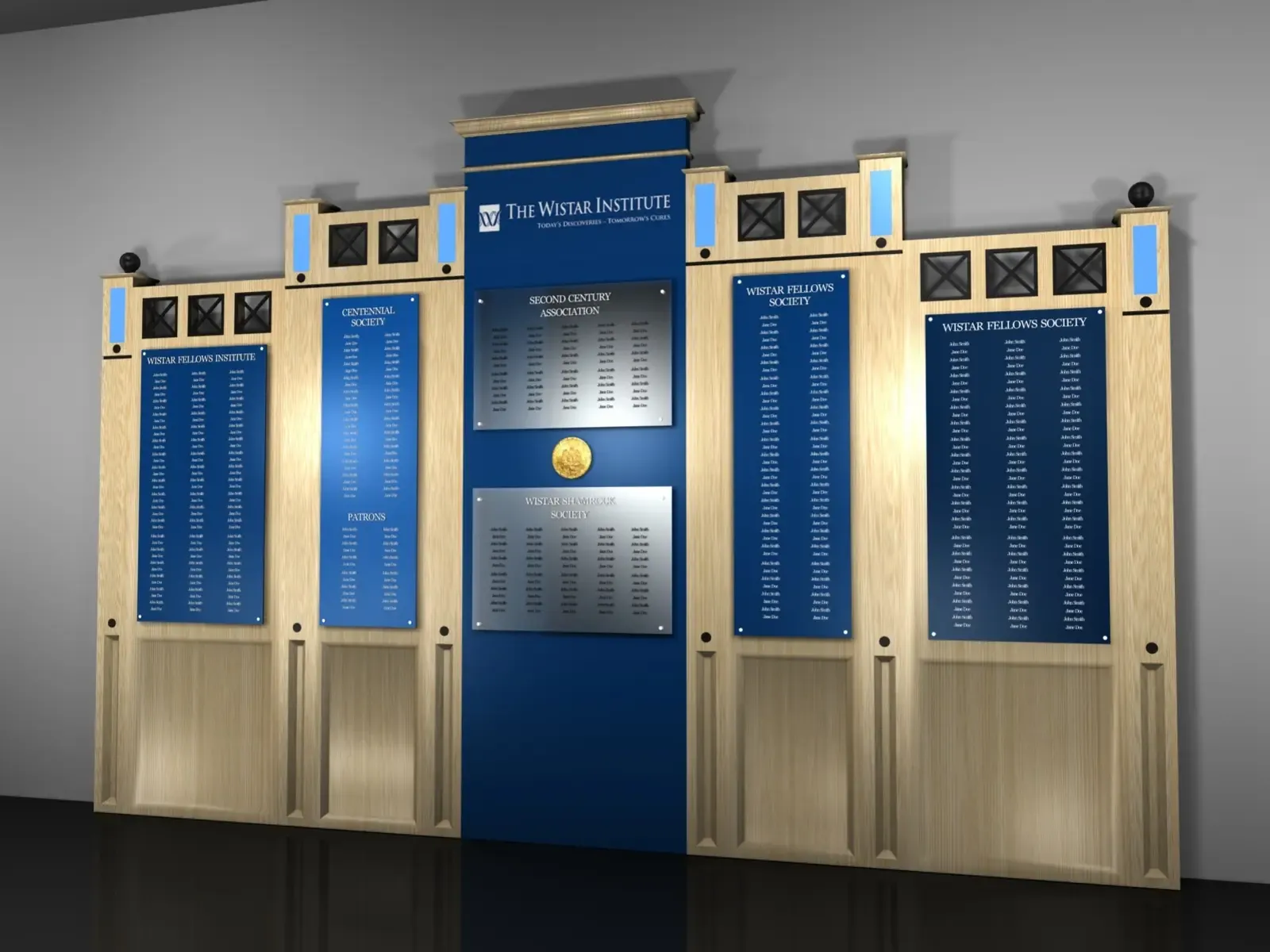
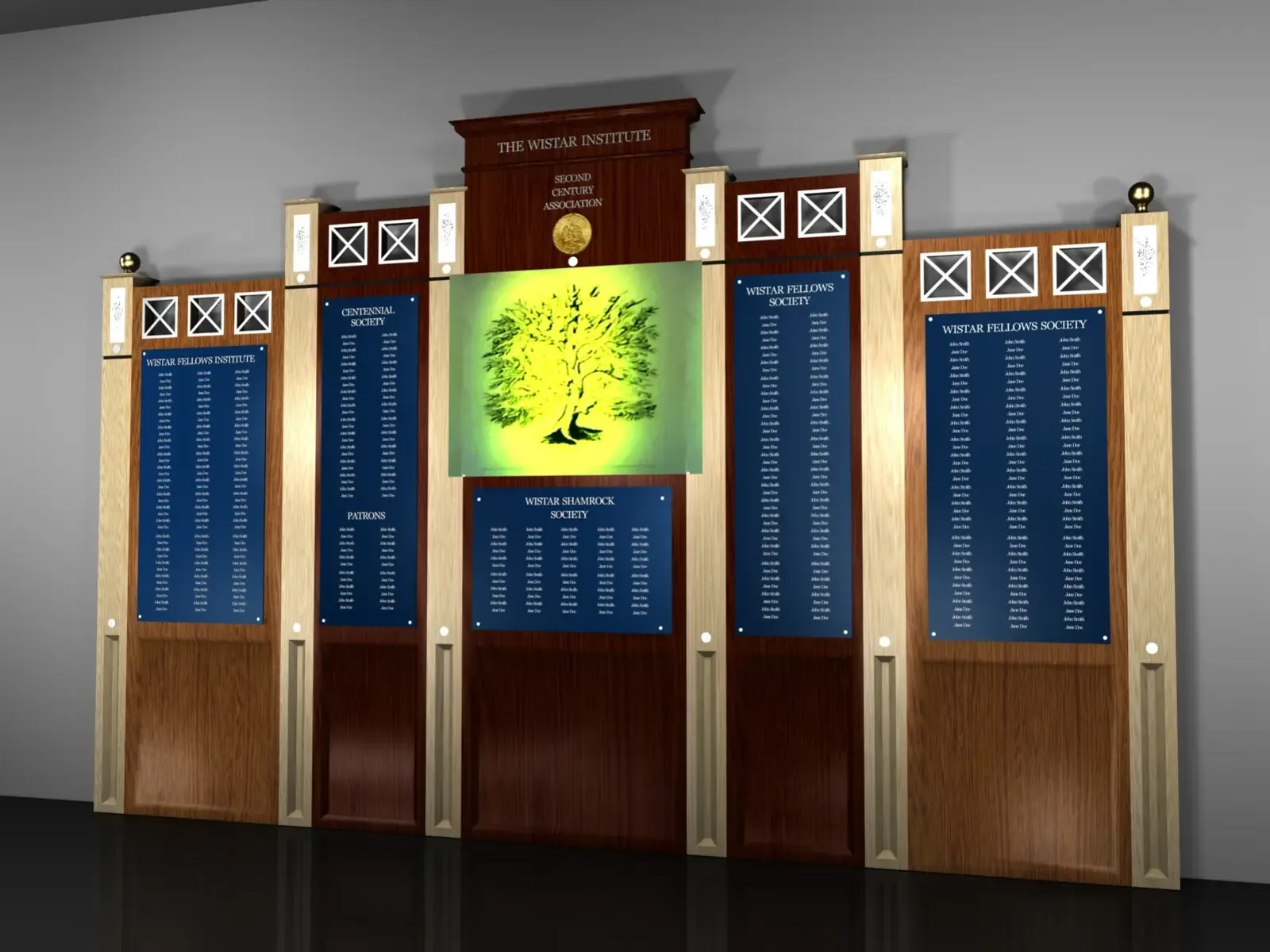
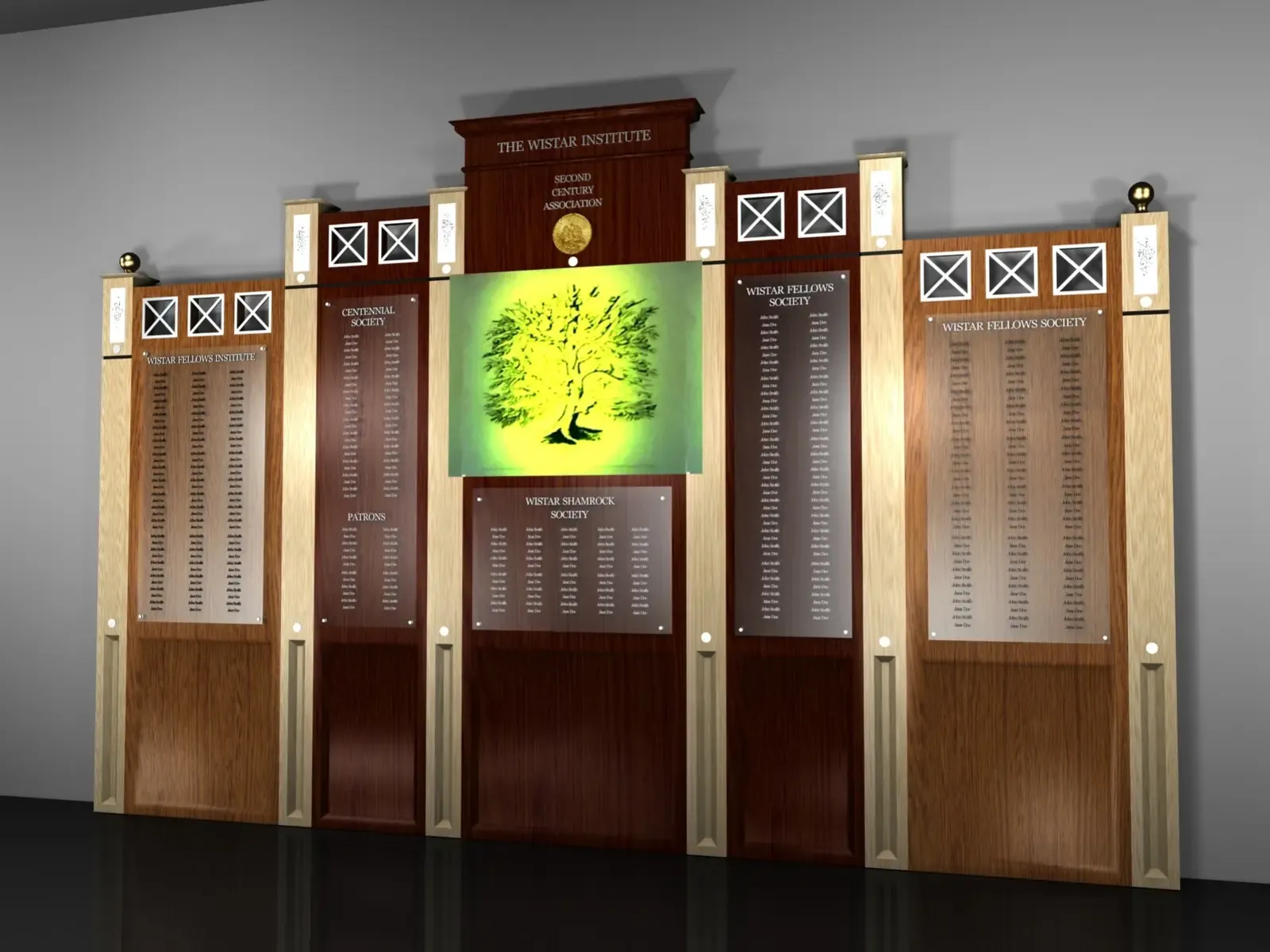
The Wistar Institute
Material and mood studies exploring three directions.
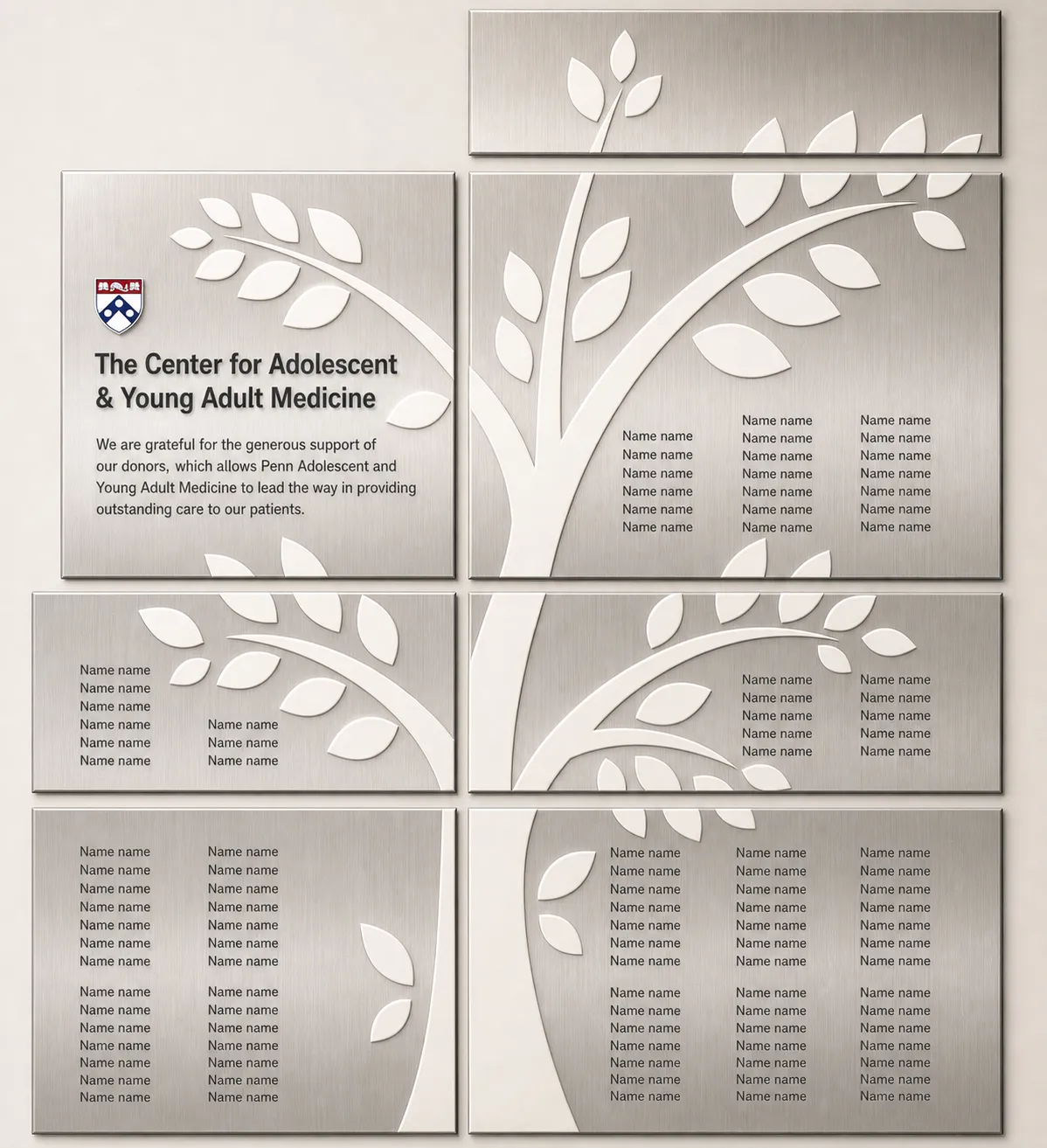
Penn Medicine
A dimensional tree-cutout concept that turns a donor list into a living, sculptural form.
02
Multiple Directions
One story, many directions.
A single recognition goal can be expressed in dozens of ways. For St. Joseph's Prep — Howley Scholars Program, we developed eight distinct directions, so the school could see the full range before choosing the one that fit their space and voice.
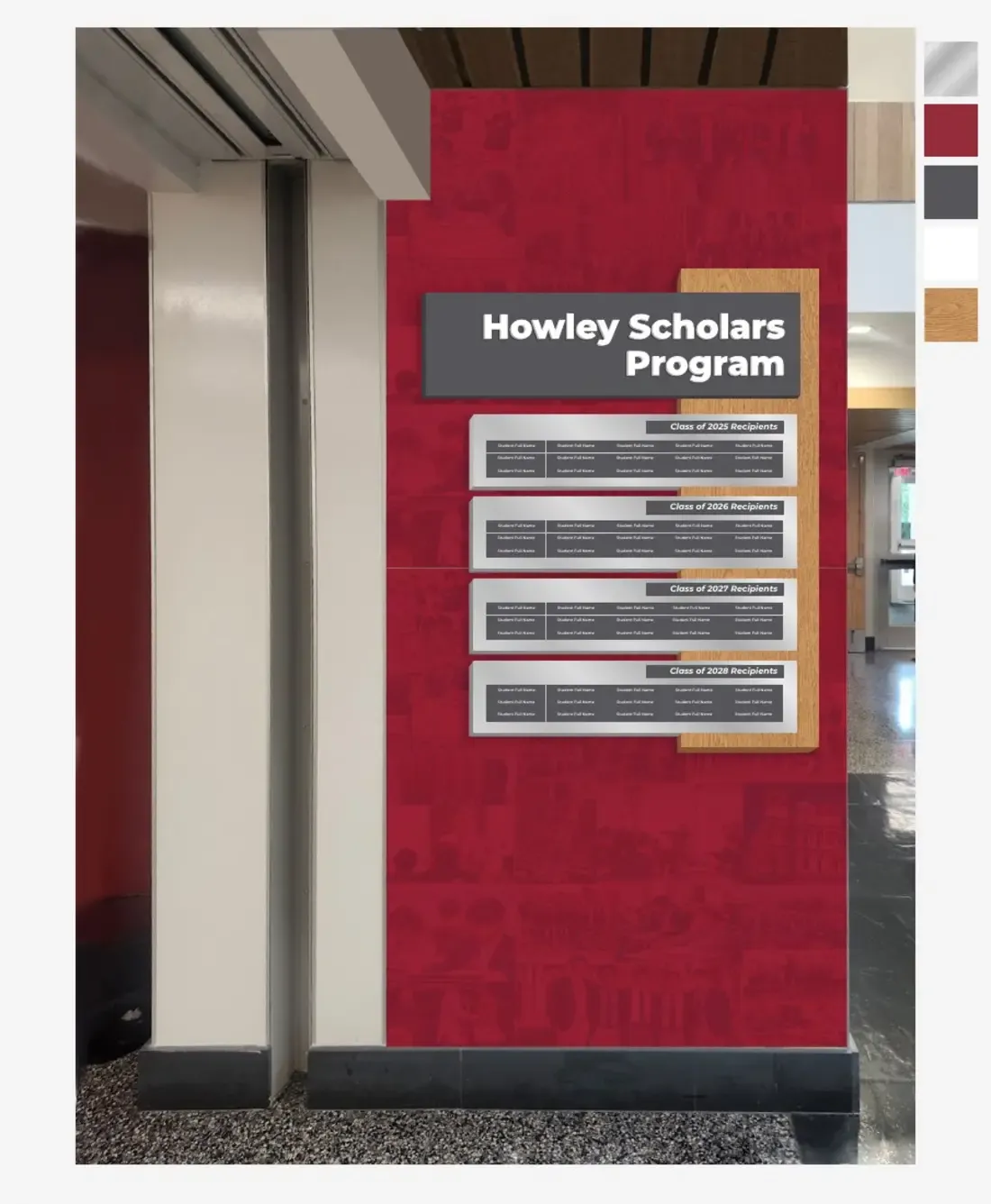
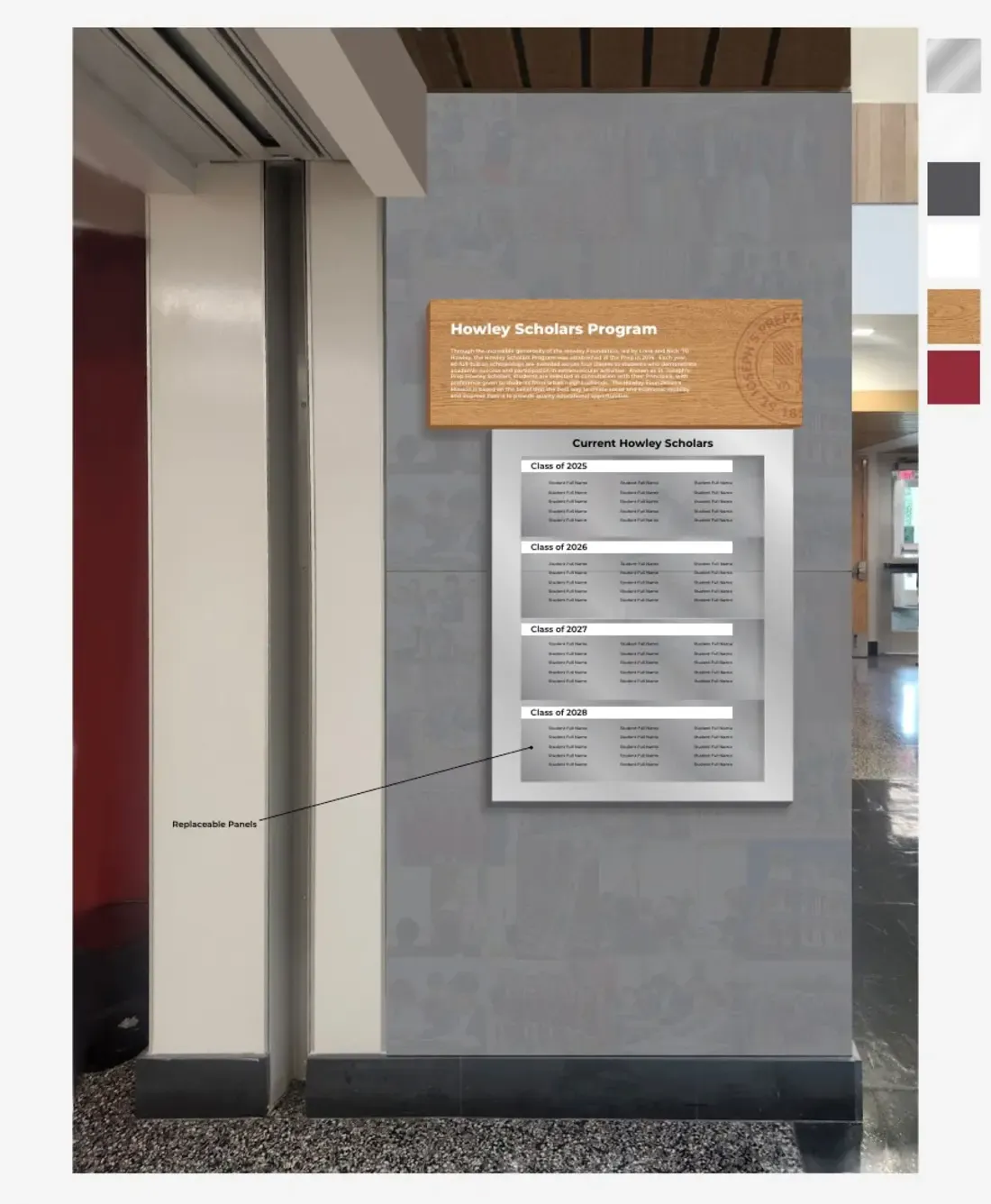
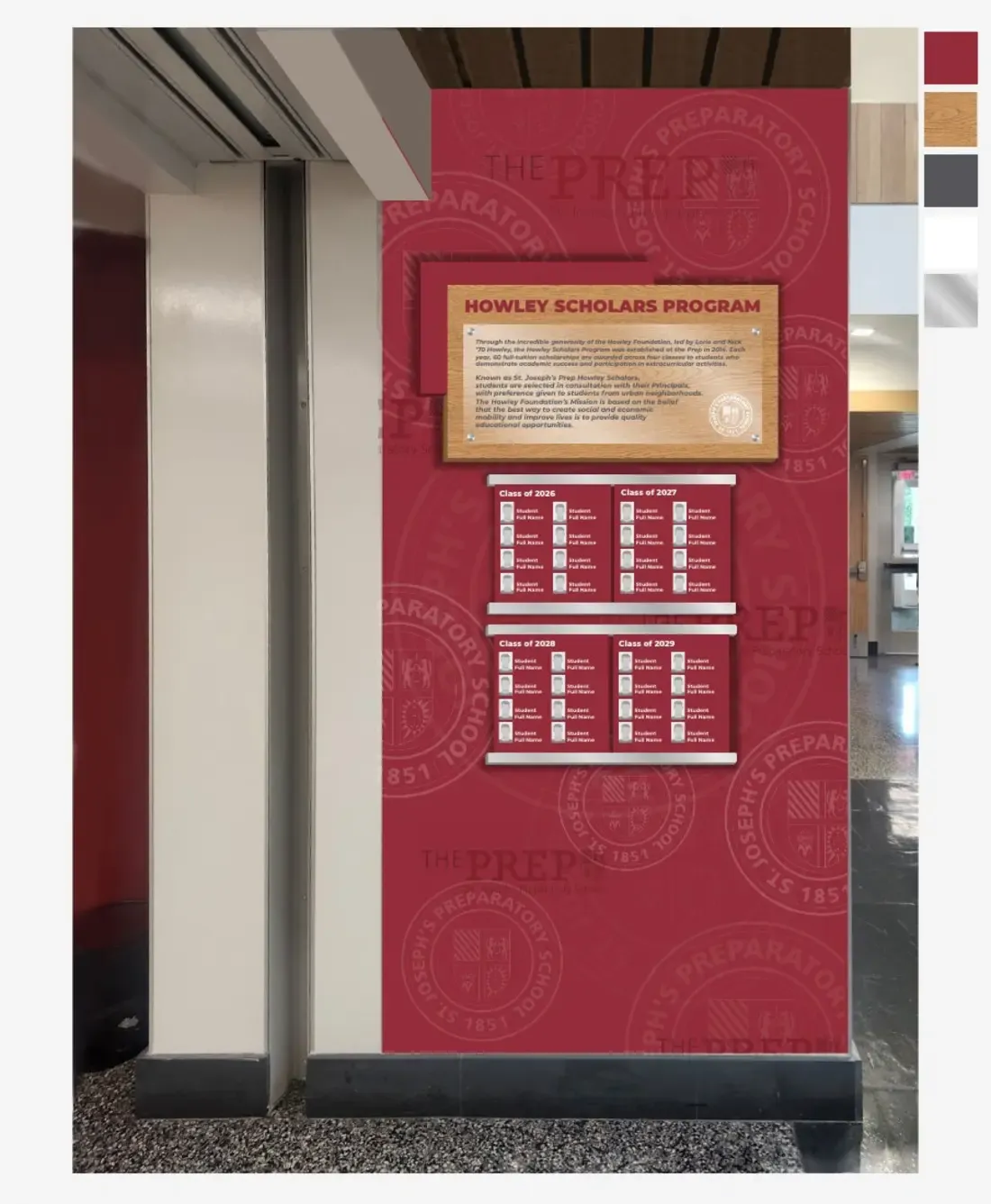
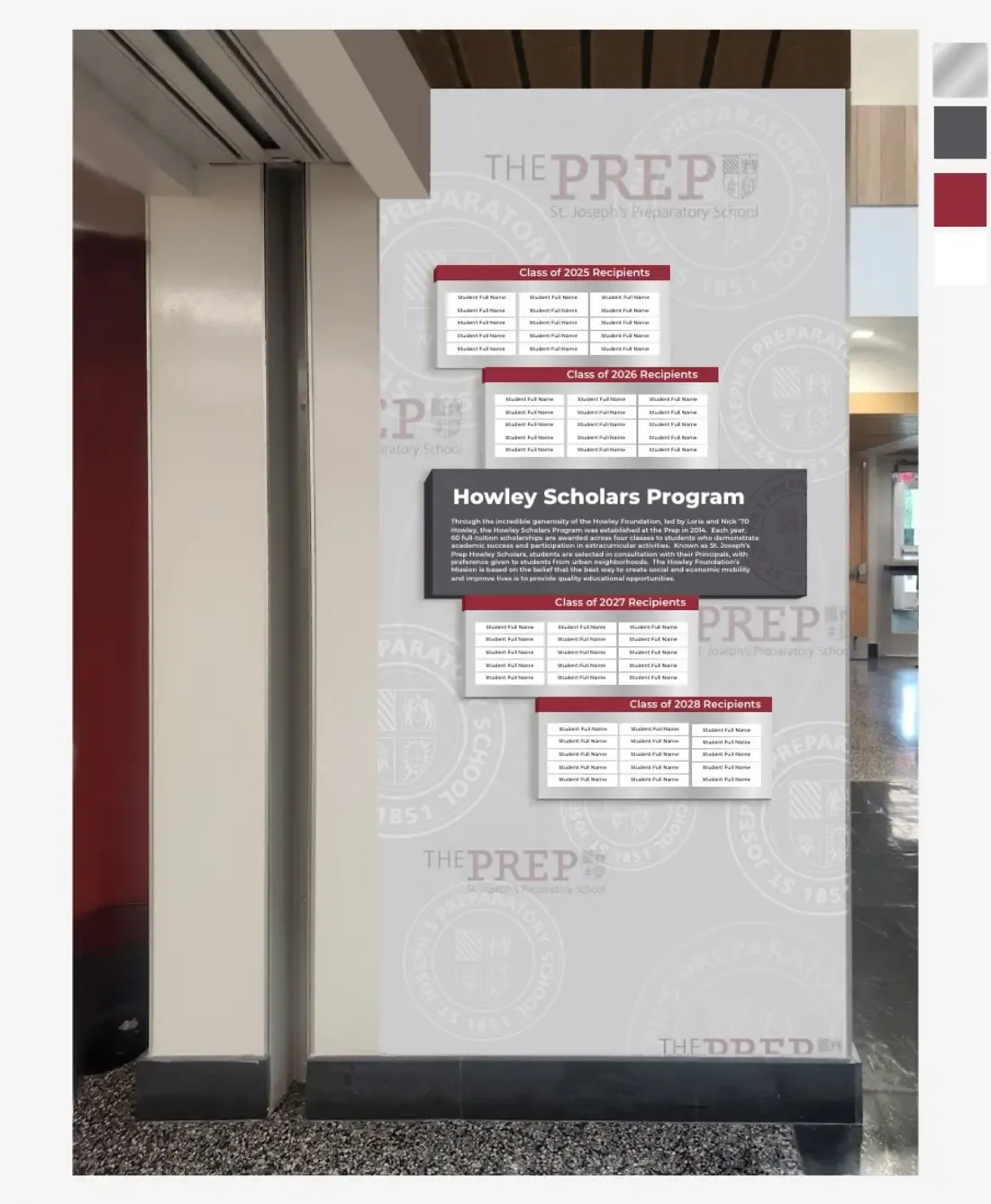
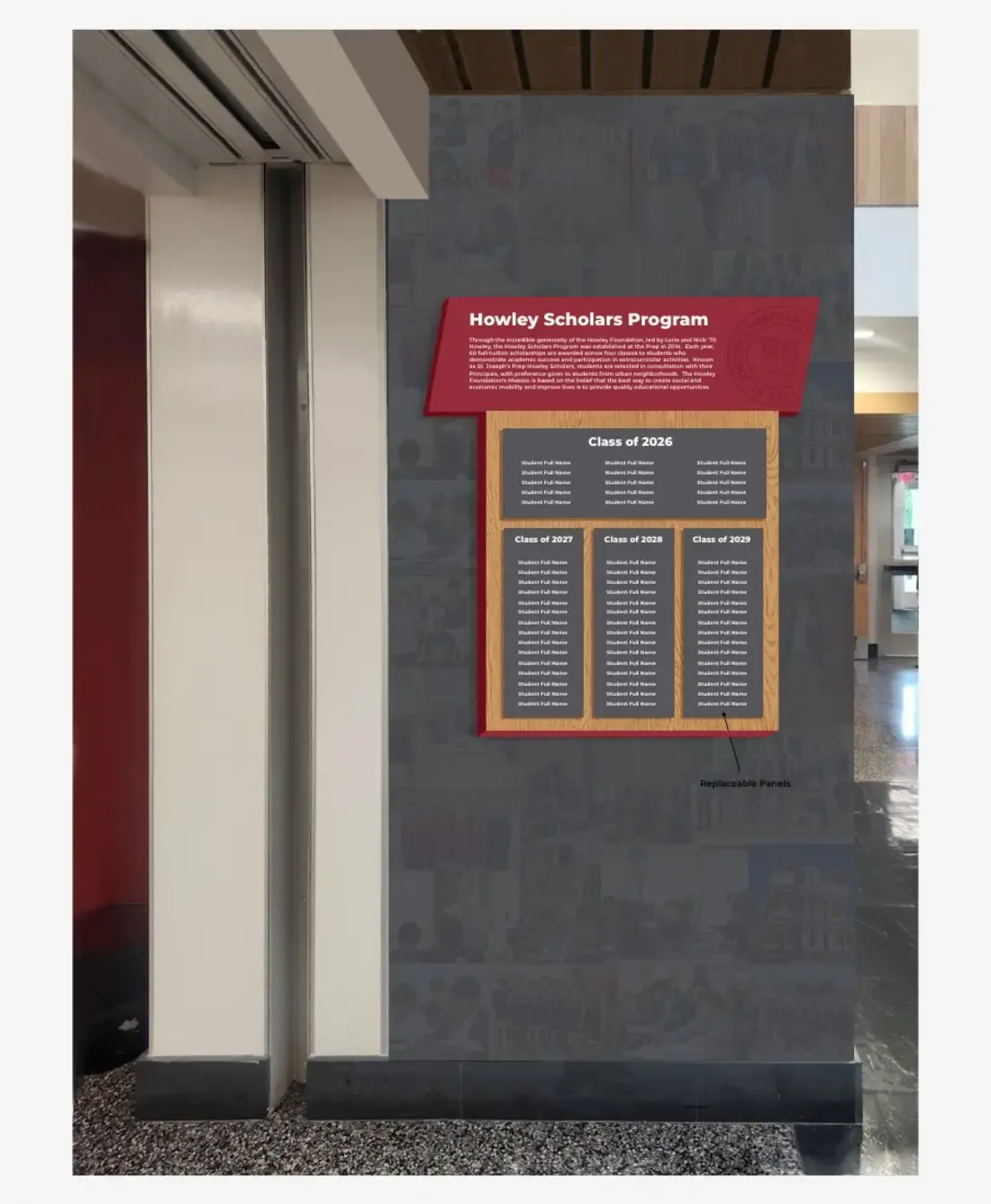
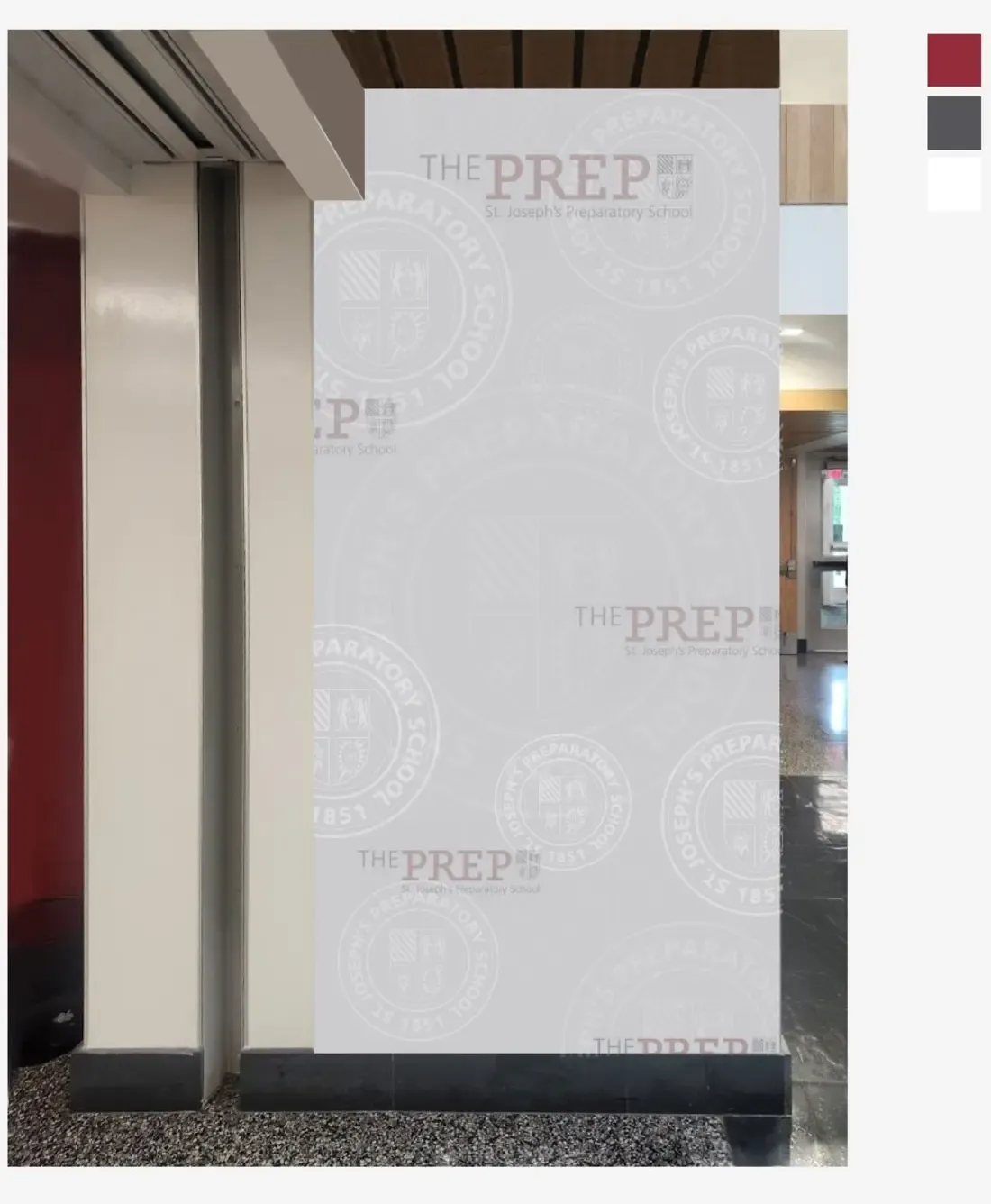
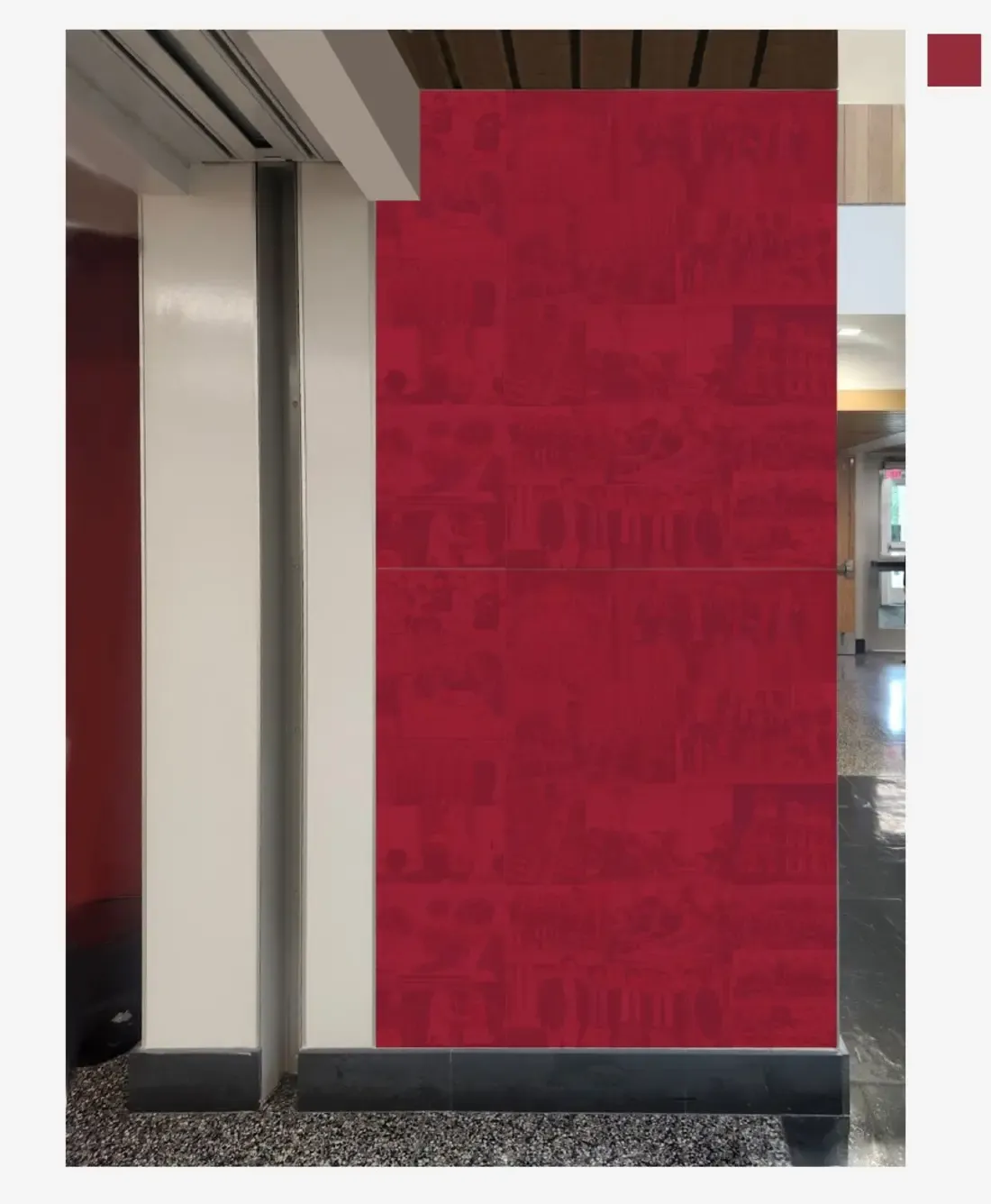
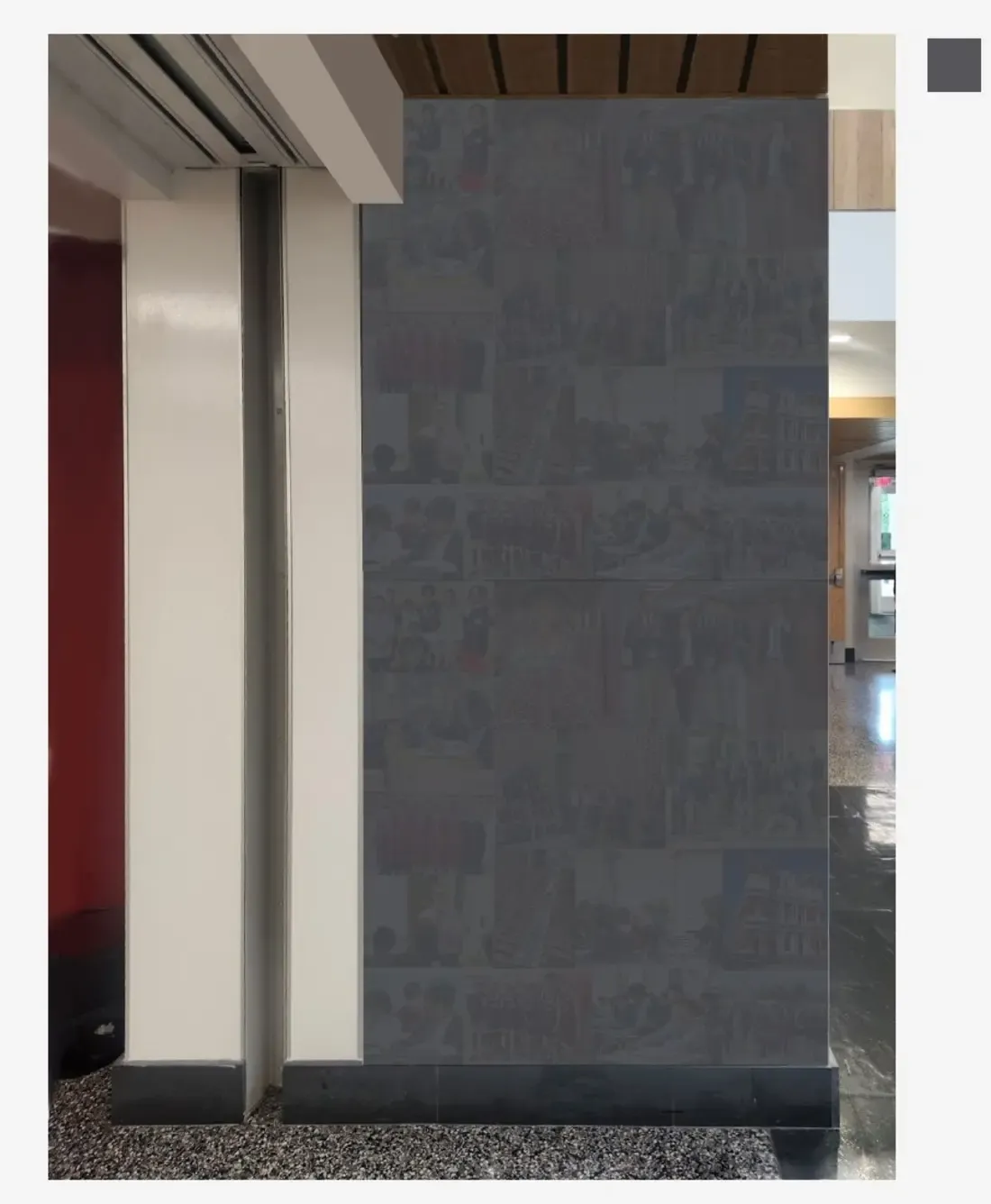
St. Joseph's Prep — Howley Scholars Program · 8 directions
Dimensional banding · warm wood + floating acrylic · layered story + names · light tonal composition · compact framed system · tonal white backdrop · prep-red photo mural · charcoal photo mural.
03
Build in the next chapter
Plan for today. Leave room for tomorrow.
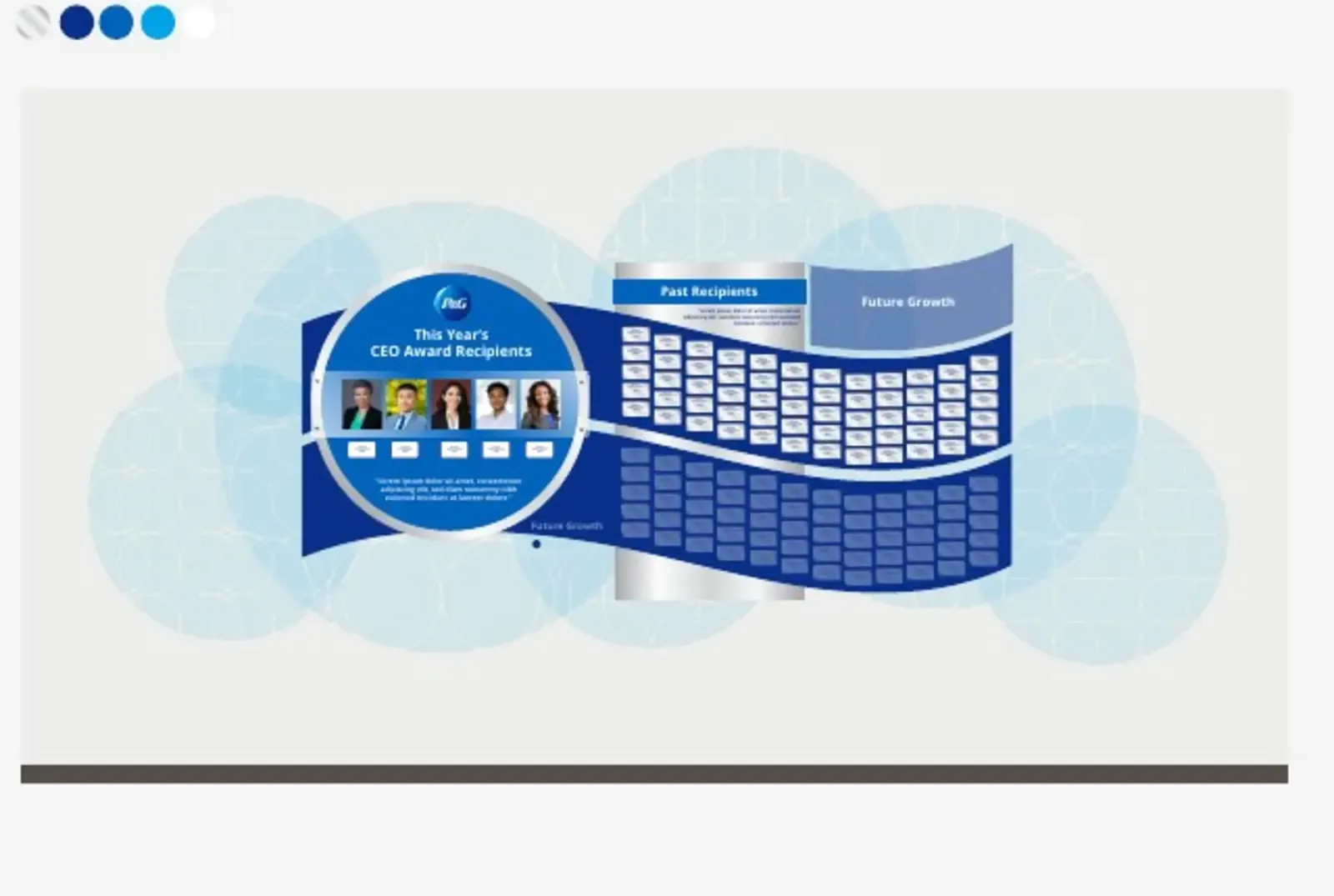
Both studies recognize current recipients, preserve past recognition, and plan future growth. The difference is the experience: one is portrait-led and graphic; the other becomes a flowing, expandable system.
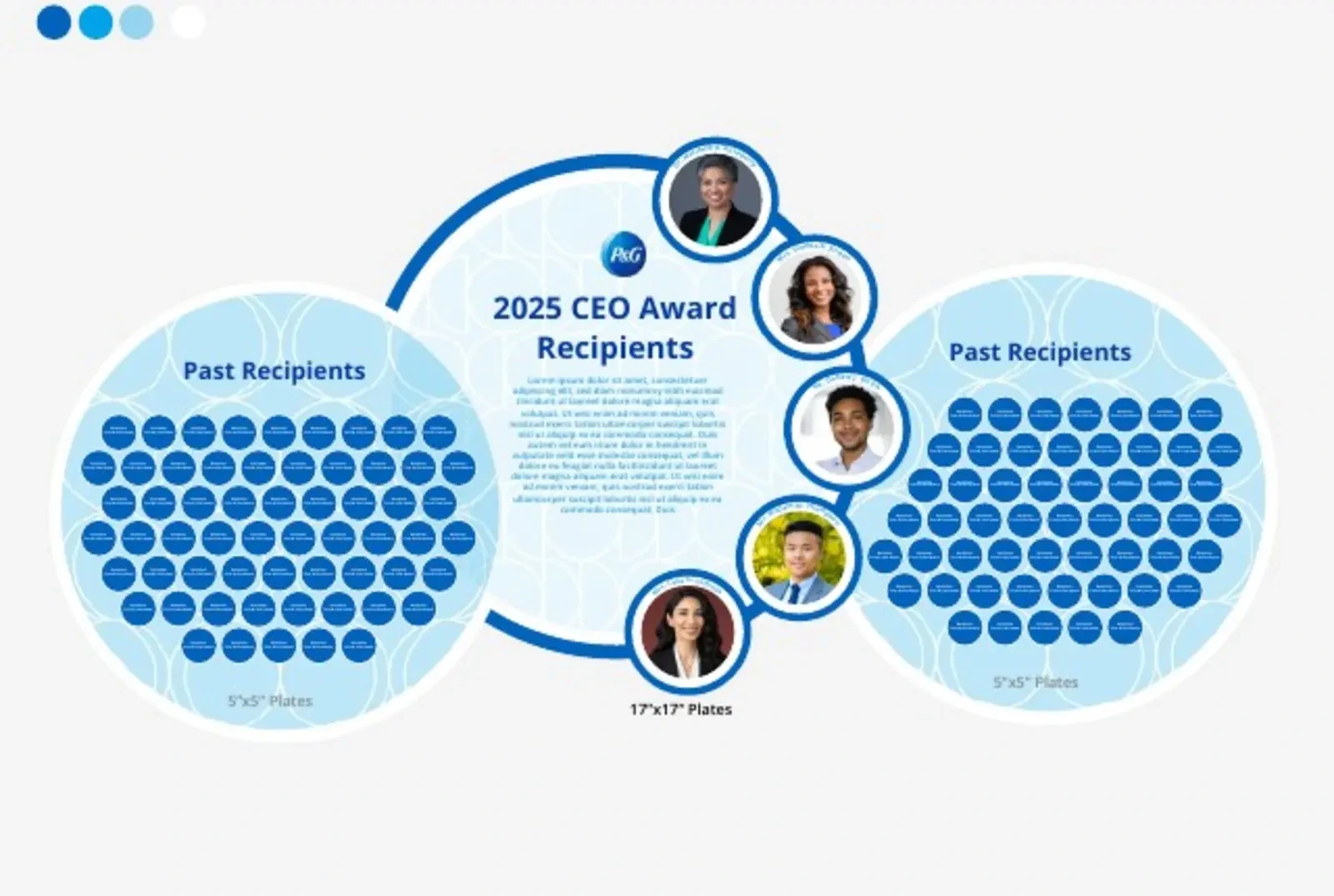
Portrait-led composition
Individual stories create a collective centerpiece.
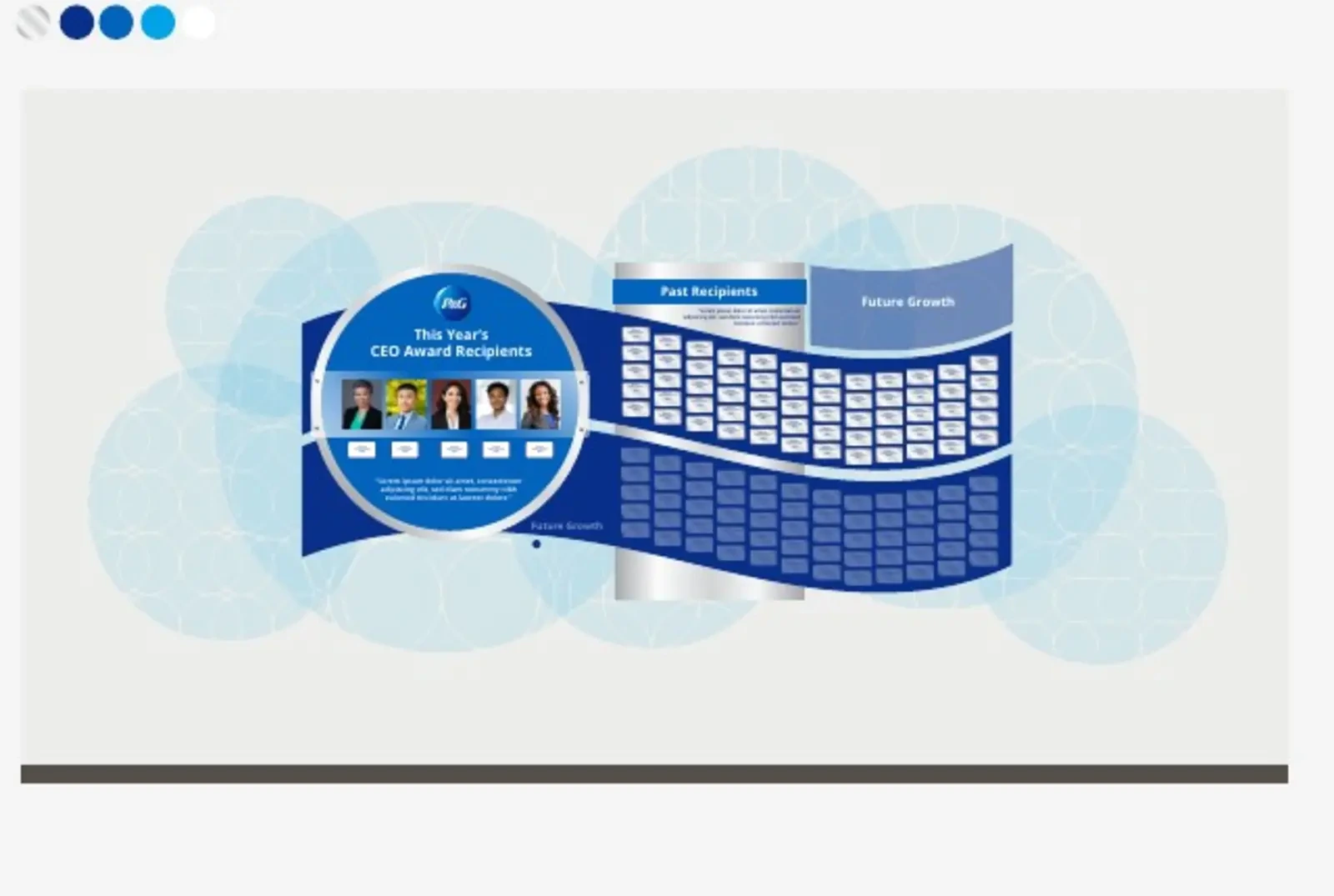
Expandable ribbon system
Past, present, and future remain visually connected.
Concept artwork is proprietary to B&D Donor Recognition and is presented for inspiration. Final concepts are developed for each client and may not be reproduced without permission.
04
From idea to delivery
We see the opportunity — and carry it through.
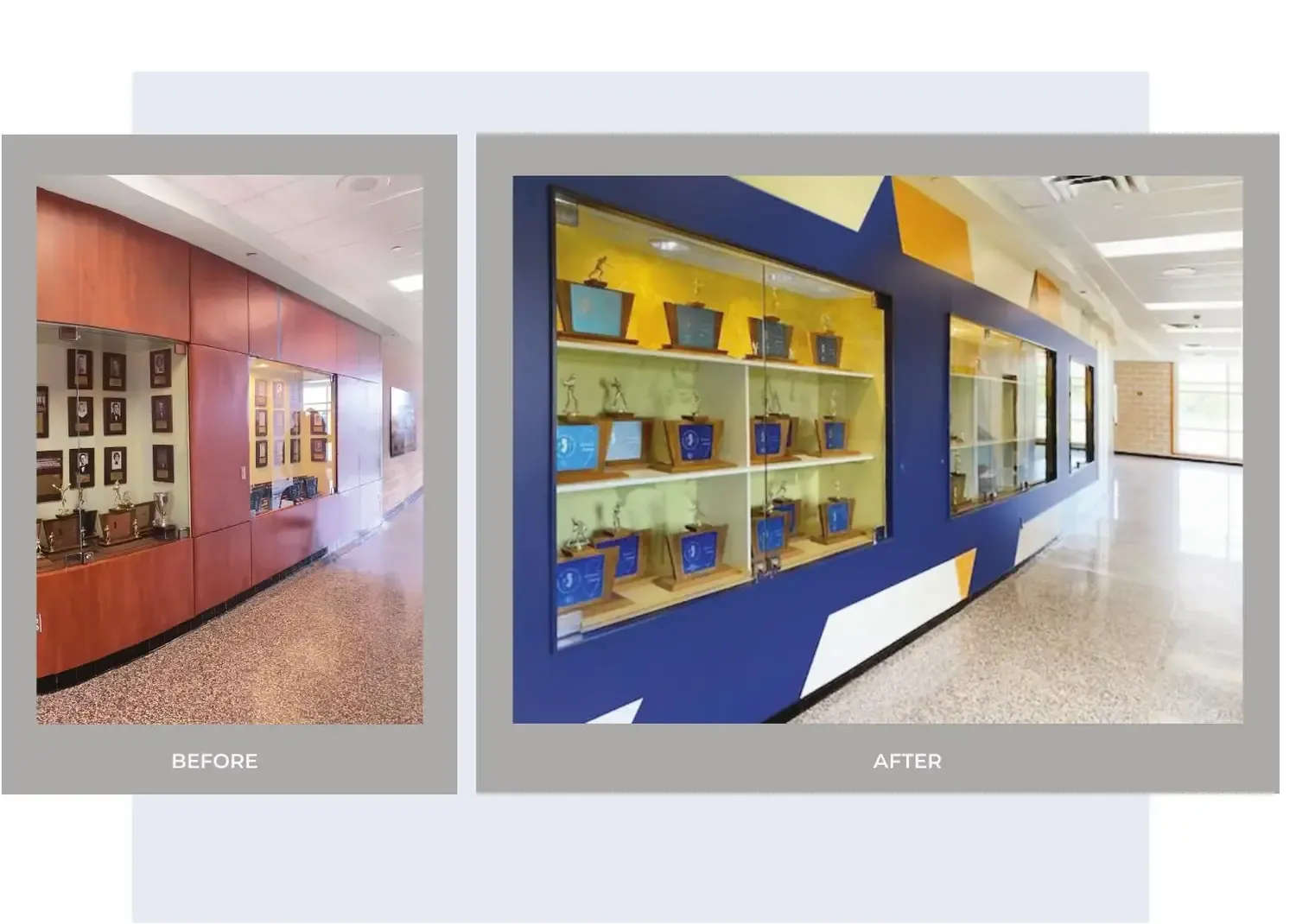
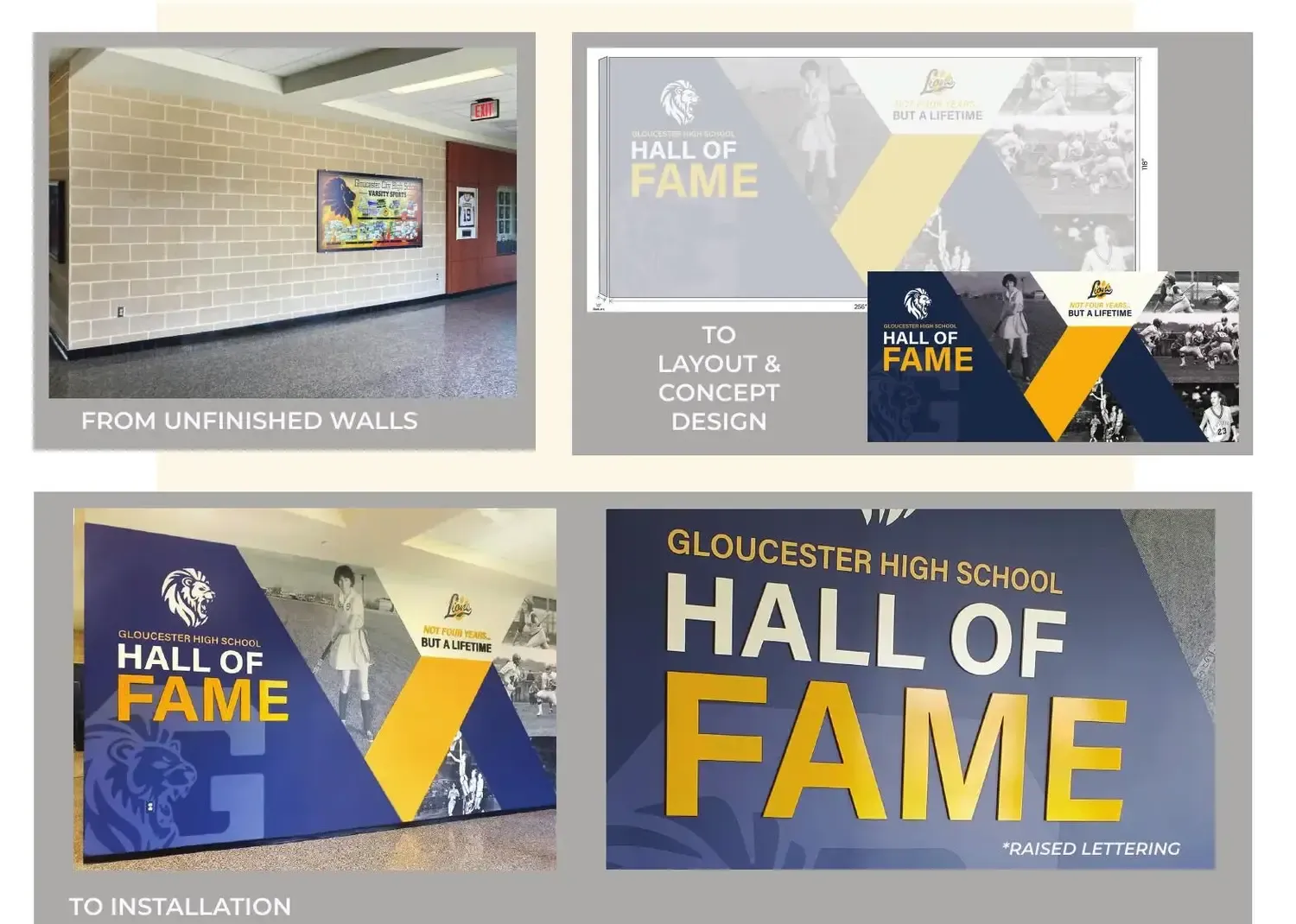
At Gloucester City High School, an unfinished passage became a place of pride. B&D brought the display cases, dimensional graphics, and school identity together as one complete recognition environment.
See more transformations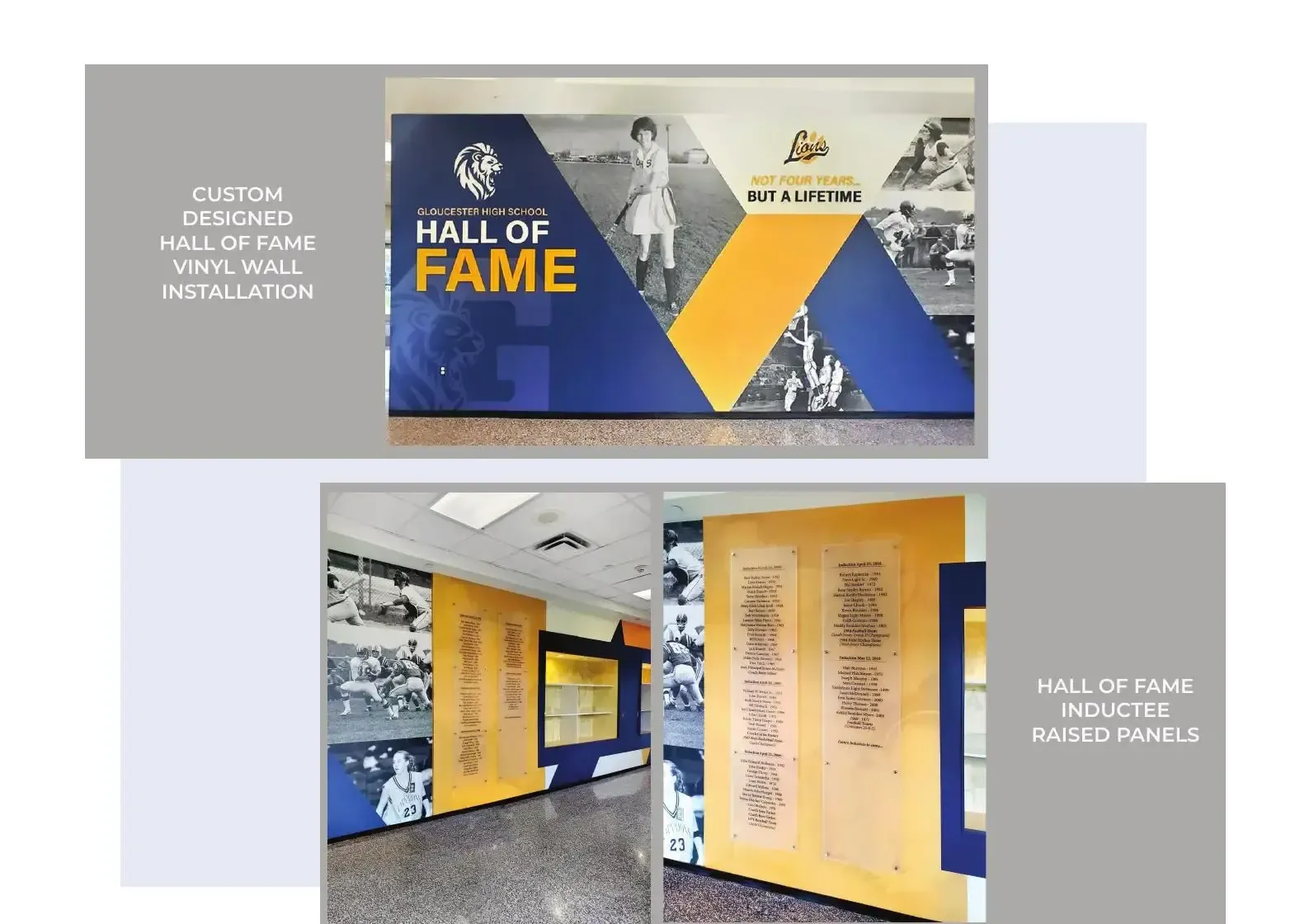
More real-world transformations
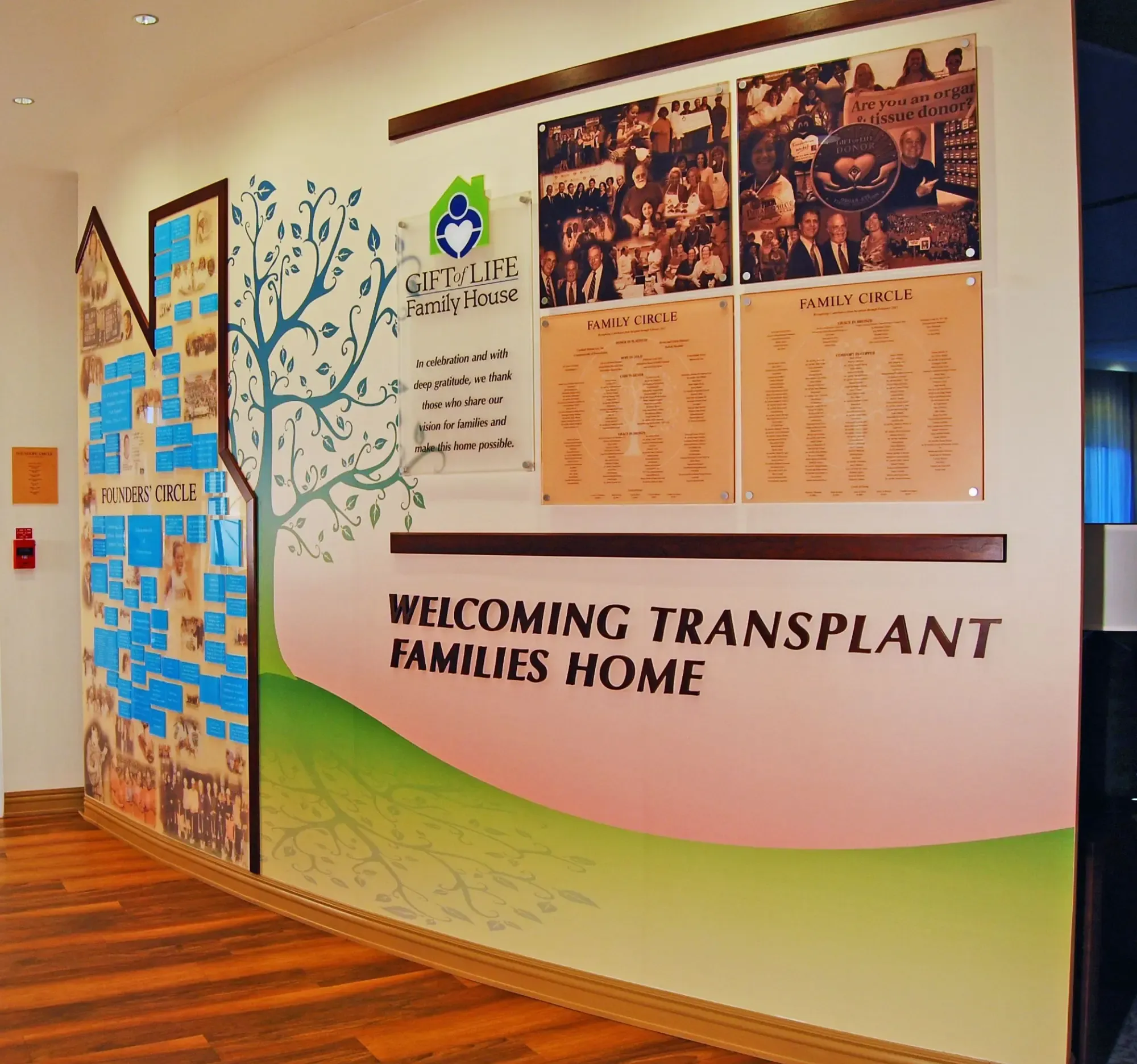
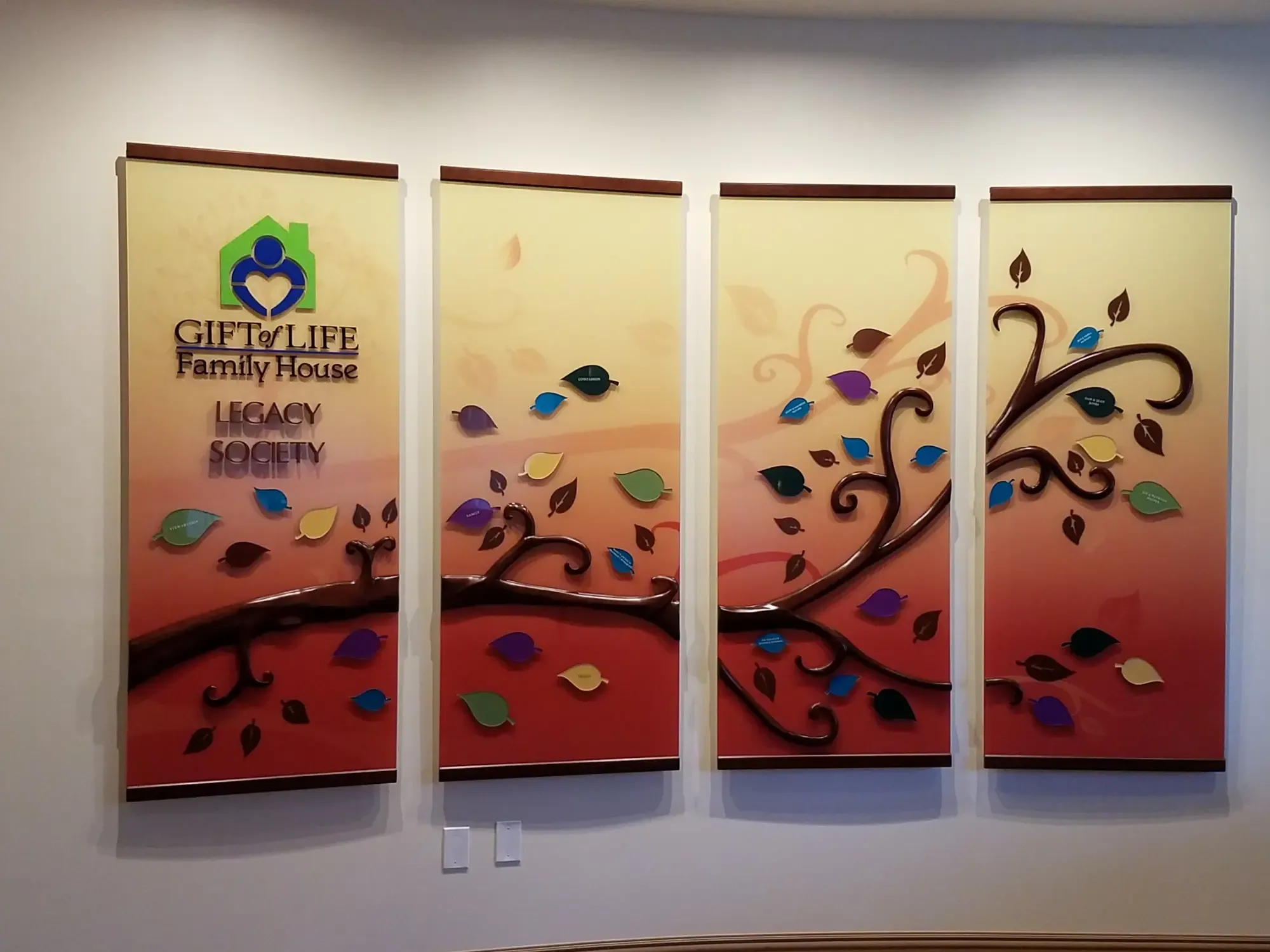
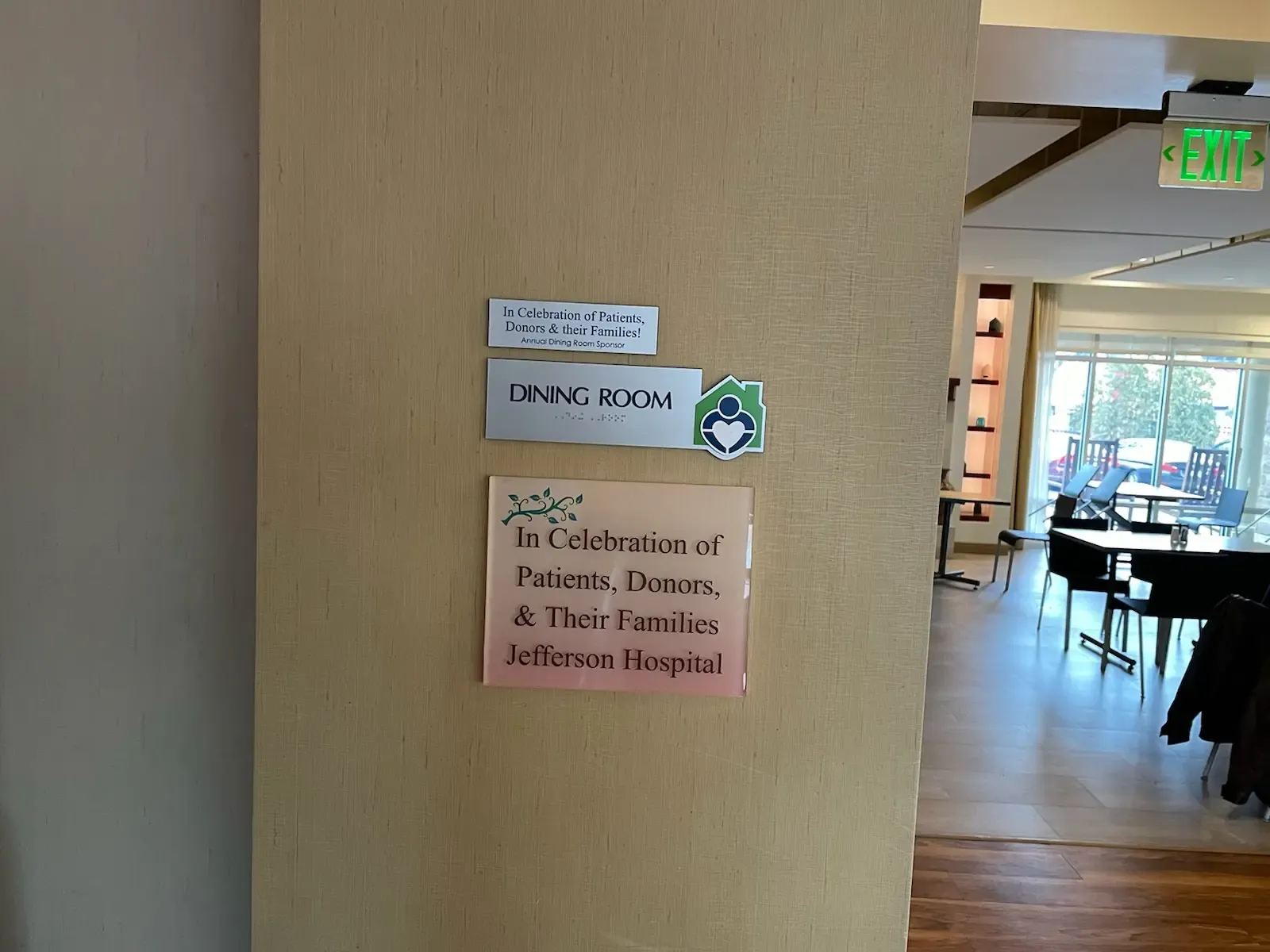
Gift of Life Family House
A unified visual language across donor walls, legacy recognition, and room identification.
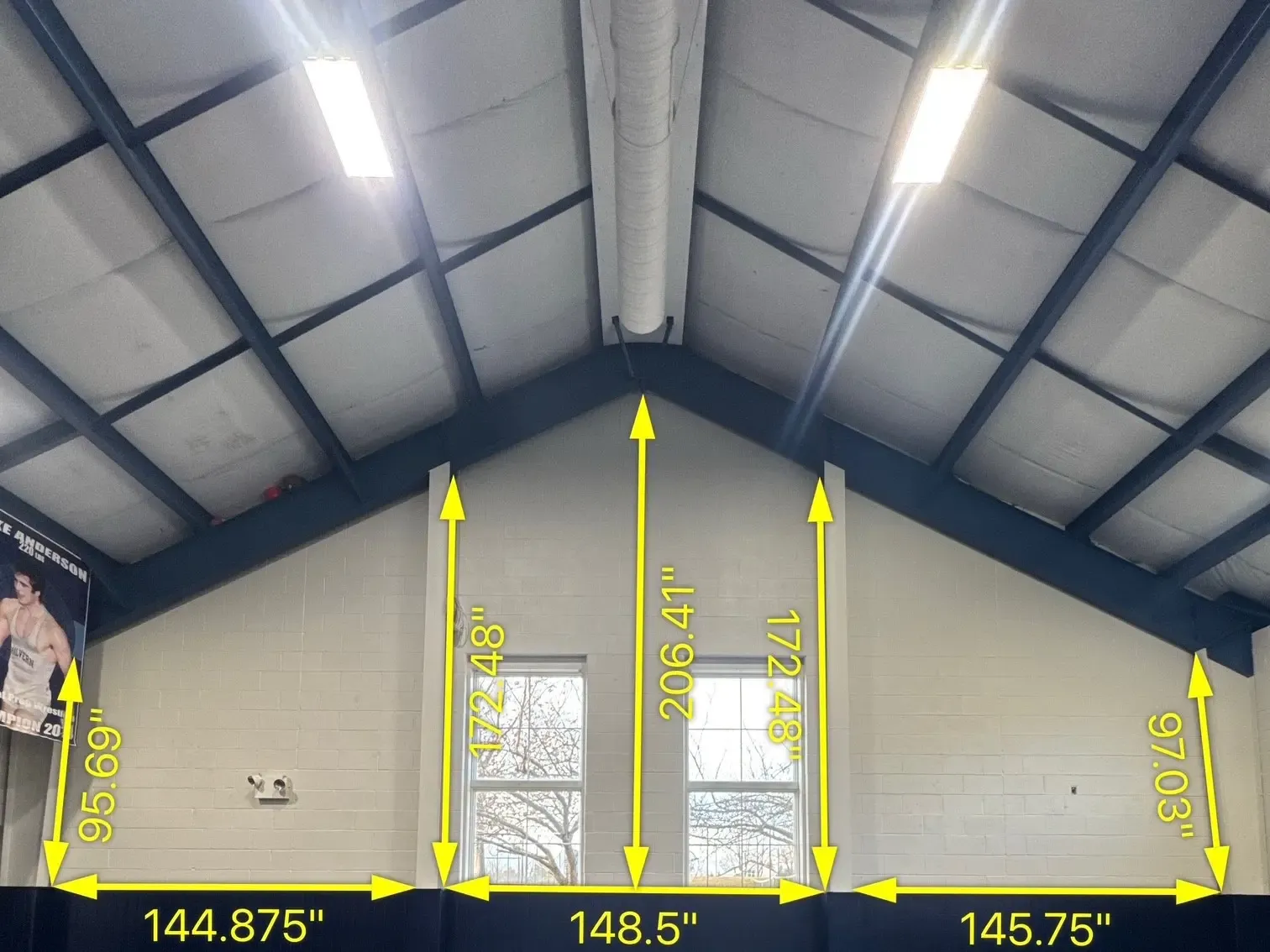
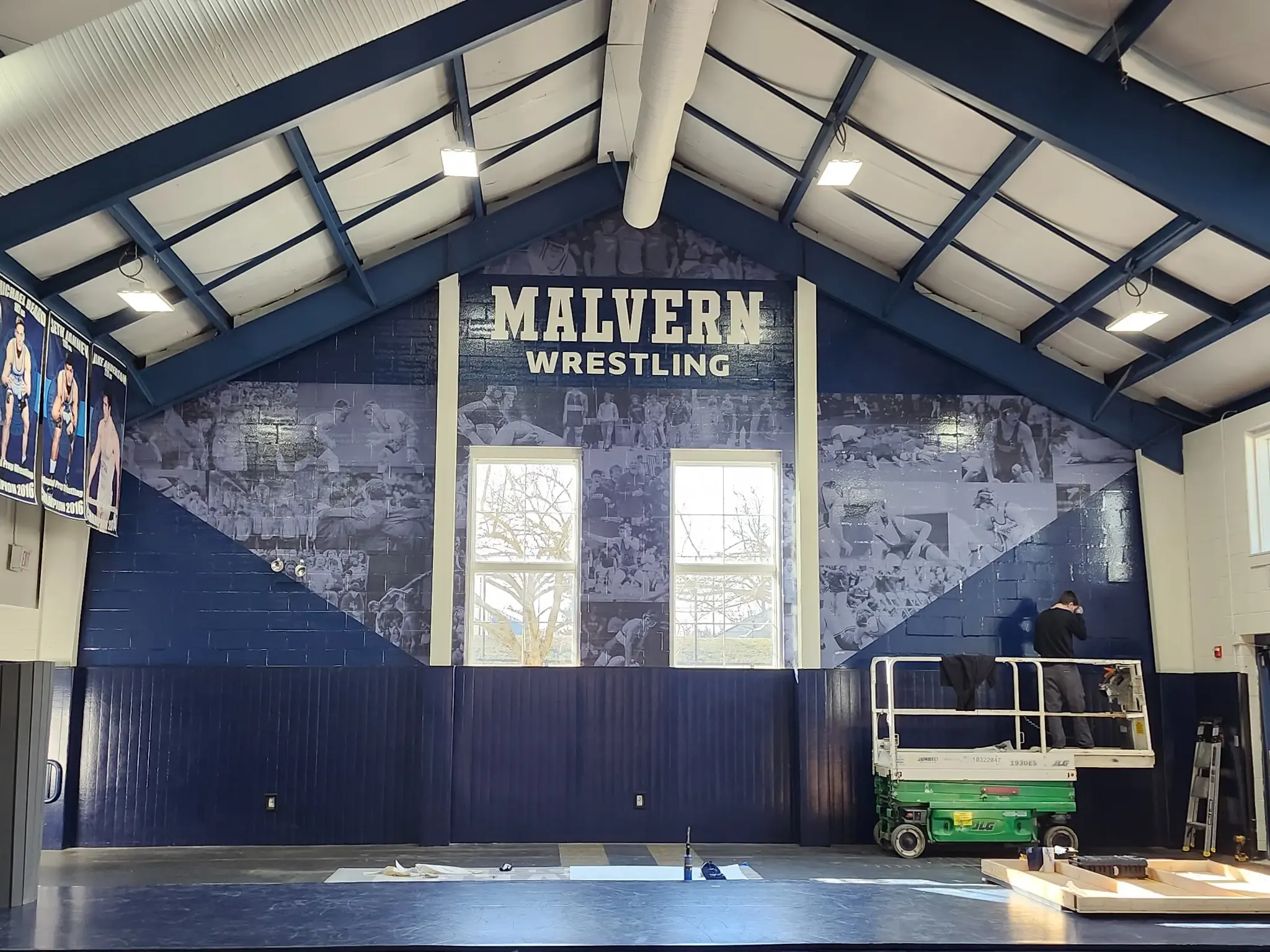
Malvern Prep Wrestling Gym
A large wall unified through archival imagery and school colors.
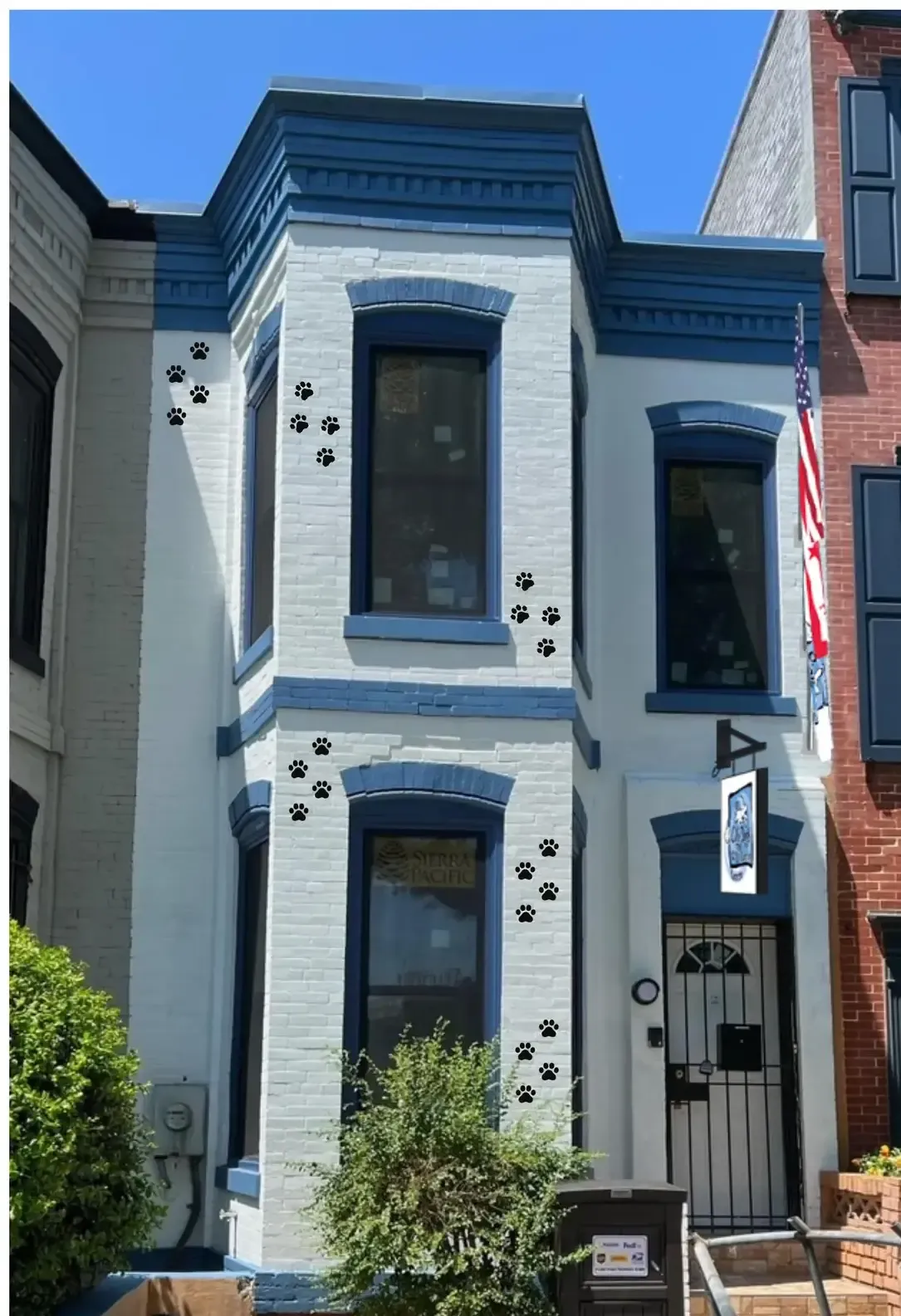
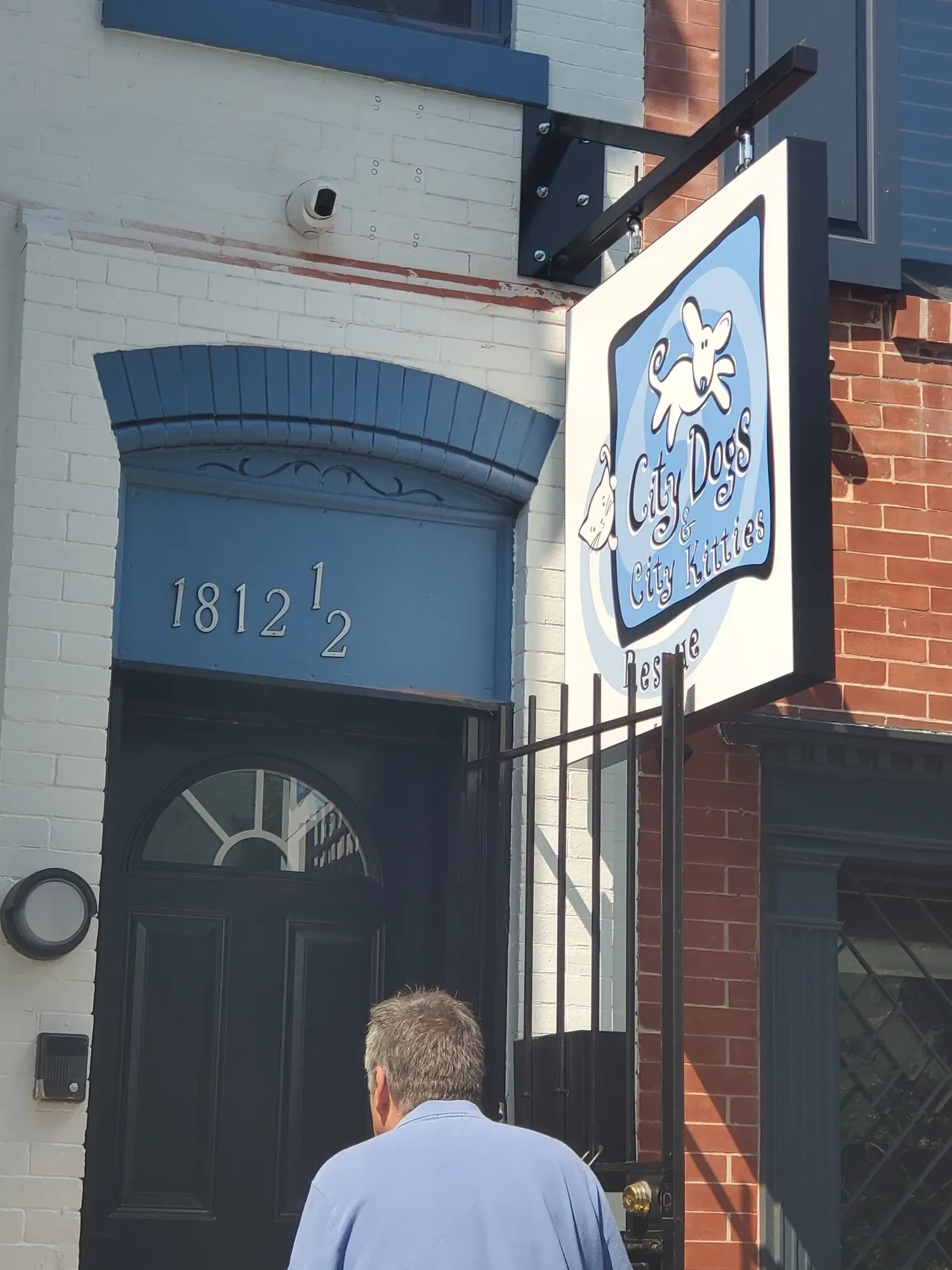
City Dogs & City Kitties
An exterior identity built around a paw-print graphic device.
Questions
What makes a strong donor recognition concept?
It starts with your story, not a template — a concept that fits your space and architecture, makes your giving levels clear, and leaves room to grow.
How does the custom development process work?
We Understand, Develop, and Deliver: we learn your goals, develop original concepts (often several directions to choose from), then guide materials, fabrication, and installation.
Can a display be designed to grow over time?
Yes. We design for expansion from the start, so new names and giving levels can be added later without redesigning the display.
What materials can be used?
A wide range — engraved metal and bronze, acrylic, wood, glass, dimensional elements, and printed imagery — chosen to fit your space, story, and budget.
How is pricing approached?
Every project is custom, so pricing depends on scale, materials, and complexity. Once we understand your goals, we provide a clear estimate.
Can you integrate with our existing displays?
Yes. We can design new recognition that complements your current displays — or unify everything into one cohesive system.
See an idea that fits your vision?
Every concept starts with a conversation. Tell us about your space, your donors, and your goals, and we'll design a recognition display around them.